


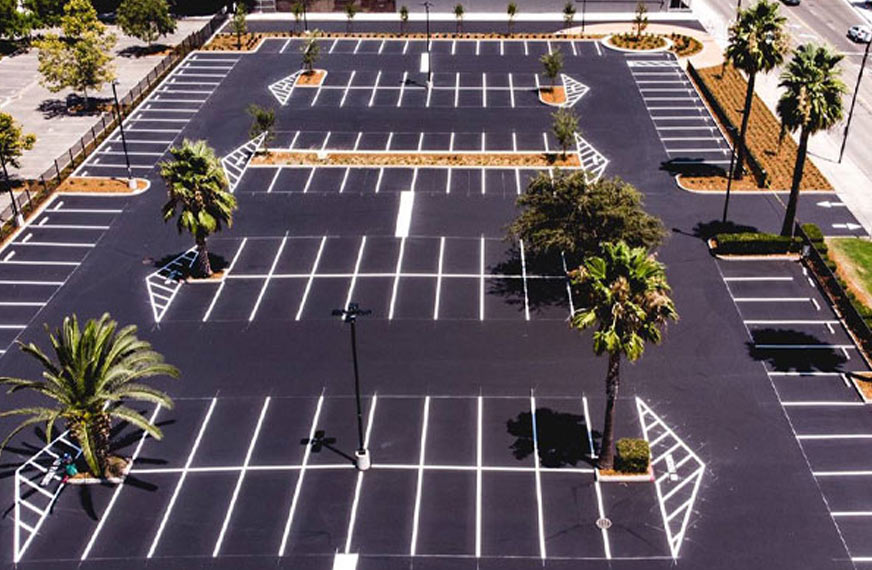
A well-organized parking area plays an important role in creating a safe, convenient, and professional environment for drivers, pedestrians, employees, customers, and visitors. While pavement markings help define individual spaces and traffic lanes, signs provide additional information that helps people understand how the parking area should be used. Clear signs can identify entrances, exits, reserved spaces, pedestrian crossings, loading zones, restricted areas, and other important locations. Professional parking lot signage can therefore contribute to better organization and easier navigation while helping property owners communicate parking rules and expectations. When signs are thoughtfully designed, correctly positioned, and properly maintained, they become an important part of an effective parking management system.
Improving Traffic Flow and Navigation
One of the main benefits of properly designed parking signs is that they can make vehicle movement easier to understand. Drivers entering an unfamiliar property may not immediately know where to find parking, which direction they should travel, or where they should exit. Directional signs can provide information at important decision points, helping drivers follow an established route without unnecessary confusion. This can be particularly useful in larger parking areas where multiple entrances, exits, lanes, and sections may be present. Effective parking lot signage works alongside pavement markings to create a visual system that guides drivers from the moment they enter until they leave the property.
Creating a More Organized Parking Environment
Organization is essential when a parking area serves many vehicles throughout the day. Clearly identified parking spaces, reserved areas, loading zones, and other designated sections can help drivers understand where they are permitted to park. Without appropriate signs, vehicles may be left in unsuitable areas, spaces may be used incorrectly, and traffic patterns can become less predictable. Signs provide a simple way to communicate the intended use of different areas without requiring constant supervision. When combined with clear striping and consistent pavement markings, parking lot signage can help create a more orderly environment that is easier for everyone to use.
Supporting Pedestrian Safety
Parking areas are shared environments where pedestrians frequently walk between vehicles, sidewalks, building entrances, and other destinations. Drivers may have limited visibility in certain areas, especially around parked vehicles, intersections, and busy entrances. Signs can help identify pedestrian crossings, walking routes, entrances, and other areas where drivers should expect people to be present. When these signs are placed where drivers can see them in advance, they can provide useful visual reminders to pay attention to pedestrian activity. Properly planned parking lot signage can therefore complement other safety features, such as marked crossings, sidewalks, lighting, speed controls, and traffic-calming measures.
Supporting Accessible Parking Areas
Accessible parking requires clear identification so that designated spaces and related access areas can be recognized easily. Signs can communicate which spaces are reserved for eligible users and can help distinguish them from standard parking spaces. Depending on applicable requirements, accessible parking areas may involve specific sign designs, symbols, dimensions, placement, and pavement markings. Property owners should review the requirements that apply to their particular property rather than assuming that a generic sign will meet every obligation. Proper parking lot signage can form an important part of an accessible parking system when it is coordinated with appropriate pavement markings and accessible routes.
Clearly Identifying Reserved Spaces
Many properties have parking spaces reserved for particular users or purposes. These can include visitor spaces, employee parking, customer parking, service areas, loading spaces, management parking, or other designated areas. Clearly identifying these spaces helps reduce uncertainty and can make parking policies easier to understand. A driver who sees a properly placed sign can determine whether a space is intended for general use or has specific restrictions. This can reduce accidental misuse and make it easier for property managers to communicate parking rules. Consistent parking lot signage can also create a more professional appearance by giving different parking areas a clear and recognizable identity.
Communicating Parking Rules
Parking signs can provide important information about rules and restrictions that may not be obvious from pavement markings alone. Signs can communicate information about time limits, restricted parking, loading requirements, permit areas, fire lanes, towing policies, or other property-specific rules. Clear communication can help visitors understand expectations before they leave their vehicles. However, signs should be designed with readability in mind. Excessive wording, small text, or confusing messages can make a sign difficult to understand. Effective parking lot signage should communicate necessary information as clearly and efficiently as possible while being positioned where users can reasonably see it.
Improving Visibility at Important Locations
Sign placement is just as important as sign design. A well-made sign may have little value if it is hidden behind landscaping, blocked by parked vehicles, positioned too far from a decision point, or difficult to see at night. Signs should be located where drivers and pedestrians have enough time to notice and understand the information. Important directional signs may be needed near entrances, intersections, pedestrian crossings, and changes in traffic flow. Property owners should also consider the surrounding environment when selecting sign locations. Strategic placement allows parking lot signage to provide information at the moment it is most useful.
Choosing Durable Sign Materials
Outdoor signs are exposed to weather, sunlight, wind, moisture, dust, temperature changes, and occasional physical contact. Because of this, material quality can influence the useful life of a sign. Durable materials can help signs maintain their appearance and readability over time, while appropriate mounting hardware can help keep them secure. Reflective or high-visibility materials may also be useful for certain applications where signs need to remain noticeable during lower-light conditions. Property owners should consider expected environmental exposure and usage when selecting materials. Investing in durable parking lot signage can help reduce the frequency of replacement and support a consistent appearance.
Making Parking Areas Easier for Visitors
Visitors may be unfamiliar with the layout of a property, making clear signs particularly valuable. A person arriving for the first time should be able to identify where to enter, where to park, how to reach the building, and how to exit without repeatedly stopping to search for directions. Clear signs can reduce uncertainty and create a more convenient experience. This can be particularly important for businesses, offices, facilities, and other properties that regularly receive new visitors. When parking lot signage is consistent and easy to understand, visitors can navigate the property more independently and spend less time looking for basic information.
Supporting Property Management
Effective signs can also make parking management easier for property owners and facility managers. When restrictions and designated areas are clearly identified, managers may spend less time answering questions about where people can park. Signs can provide a consistent reference point for employees, visitors, tenants, and service providers. If parking policies change, signs can be updated to communicate the new rules. Maintaining accurate signage also helps property managers demonstrate that important information has been communicated clearly. A well-planned parking lot signage system can therefore support both everyday operations and longer-term property management.
Coordinating Signs With Pavement Markings
Signs and pavement markings should work together rather than providing conflicting information. For example, a sign identifying a reserved space should correspond with the markings on the pavement, while directional arrows should support the instructions provided by nearby signs. If a sign suggests one traffic movement but the pavement markings suggest another, drivers may become confused. Property owners should therefore review signs, striping, symbols, curbs, and other visual elements as one complete system. Coordinating these features helps create a consistent parking environment and makes parking lot signage more effective because drivers receive the same message from multiple sources.
Maintaining Signs for Long-Term Performance
Even durable signs require periodic inspection and maintenance. Dirt, fading, physical damage, loose hardware, landscaping growth, or changes to the surrounding property can reduce a sign’s effectiveness. Property owners should inspect signs regularly to make sure they remain visible, readable, and securely mounted. Cleaning may be sufficient when dirt or dust is the main problem, while faded or damaged signs may need replacement. Signs should also be reviewed whenever parking layouts or property rules change. Maintaining parking lot signage as part of a regular property management routine can help ensure that important information remains accurate and visible.
Avoiding Excessive or Confusing Signage
Although signs are useful, installing too many signs can create its own problems. When drivers encounter numerous signs in a small area, important information may become difficult to distinguish from less important messages. Similar signs should be grouped logically, while unnecessary or outdated signs should be removed. Property owners should focus on communicating information that drivers genuinely need to navigate the property safely and efficiently. A well-designed system should provide enough information without creating visual clutter. Thoughtful use of parking lot signage allows important instructions to stand out rather than becoming lost among excessive messages.
Considering Lighting and Nighttime Visibility
Properties that remain active after dark should consider how easily their signs can be seen at night. A sign that is highly visible during daylight may become difficult to recognize when lighting levels are low. Property owners can evaluate whether important signs receive sufficient illumination or whether reflective materials may be appropriate for the application. Entrances, exits, pedestrian crossings, intersections, and restricted areas may deserve particular attention because drivers need information at these points. Regular nighttime inspections can reveal visibility problems that are not obvious during daylight. Properly maintained parking lot signage should remain useful during the actual hours in which the property is occupied and used.
Planning for Future Changes
Parking areas can change as properties expand, building uses change, traffic patterns evolve, or new parking requirements arise. A signage system should be flexible enough to accommodate reasonable changes without requiring a complete redesign. Property owners may want to consider future entrances, additional parking spaces, new pedestrian routes, or changes in reserved parking policies when planning their initial sign layout. Choosing adaptable mounting systems and maintaining consistent design standards can also make future updates easier. Planning ahead can reduce unnecessary replacement expenses and help ensure that parking lot signage remains useful as the property develops.
Enhancing the Overall Property Appearance
Parking signs are functional features, but they also contribute to the visual appearance of a property. Signs that are faded, damaged, inconsistent, or poorly positioned can make a parking area look neglected. In contrast, clean signs with consistent designs, secure mounting, and appropriate placement can create a more professional impression. Businesses and property managers often invest in landscaping, pavement maintenance, lighting, and building improvements, and signage should complement those efforts. A coordinated parking area can create a stronger first impression for customers, employees, tenants, and visitors. Well-maintained parking lot signage can therefore support both practical communication and the overall appearance of the property.
Conclusion
Professional parking signs provide much more than basic directions. They help organize vehicle movement, identify designated spaces, communicate rules, support pedestrian awareness, and make parking areas easier to navigate. When signs are properly designed, positioned, manufactured, and maintained, they can become an important part of a property’s overall traffic management strategy. Property owners should consider visibility, durability, readability, accessibility, placement, lighting, and coordination with pavement markings when developing a signage system. Regular inspections are also important because signs can become damaged, faded, obstructed, or outdated over time. By investing in thoughtful signage and maintaining it properly, property owners can create parking areas that are clearer, more organized, accessible, and convenient for the people who use them every day.

