


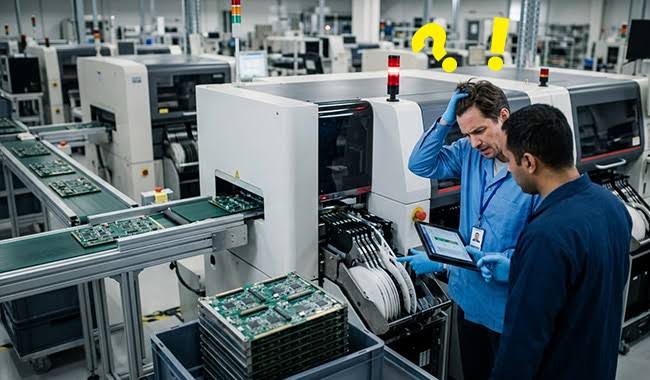
When a manufacturer invests in process control technology, the expectation is straightforward: the system runs reliably, operators trust it, and production becomes more consistent over time. In practice, that outcome is far less common than the industry acknowledges. Many control systems that appeared capable during procurement begin showing serious gaps within the first year and a half of real-world use. Alarms go unaddressed. Integration breaks down. The software becomes something operators work around rather than with.
This pattern is not limited to small facilities or budget deployments. It appears across mid-size manufacturers and larger operations alike, and the consequences are measurable — in downtime, in quality variation, in labor hours spent compensating for systems that were supposed to reduce those exact pressures. Understanding why this failure pattern exists, and what distinguishes systems that avoid it, is worth examining carefully before any purchasing decision is made.
What Makes Process Control Software Fail in Practice
The term manufacturing process control software describes systems designed to monitor, regulate, and manage the conditions under which production occurs — temperature, pressure, flow rates, equipment states, and other process variables that directly affect output quality and operational safety. When these systems work well, they provide operators with accurate real-time data, respond appropriately to process deviations, and reduce the cognitive load on floor-level staff. When they fail, they often do so quietly, well after go-live enthusiasm has faded.
The most common failure mode is not a dramatic crash. It is a slow erosion of trust. Operators begin to notice that the system displays readings that do not match physical conditions. Alerts trigger too frequently or not at all. Reports generated by the software do not align with what supervisors observe on the floor. Once that trust erodes, the system is effectively sidelined — still running in the background, still costing money in licensing and maintenance, but no longer driving decisions.
The Gap Between Configuration and Real Conditions
Most process control software is configured based on conditions that exist at commissioning. The parameters set during initial deployment reflect the equipment states, production volumes, and environmental factors present at that specific moment. Manufacturing environments, however, are not static. Equipment ages. Product lines shift. Ambient conditions change seasonally. When software is not designed to adapt alongside those changes, the gap between what the system expects and what is actually happening on the floor widens steadily.
This gap is not always visible until a problem surfaces. A quality deviation may occur repeatedly before anyone connects it to a control parameter that has been outdated for months. By then, the cost of that misalignment — in scrap, rework, or customer complaints — has already accumulated. The software was not wrong at installation. It became wrong gradually, and no one caught it because the system was not built to flag its own drift from operational reality.
Integration Failures That Compound Over Time
Process control systems rarely operate in isolation. They typically exchange data with equipment controllers, quality management systems, ERP platforms, and maintenance scheduling tools. When those integrations are brittle — built on one-time custom connections rather than stable, maintained data pathways — any change in one system can silently break the data flow to another.
These integration failures often go undetected for weeks. A production manager may be making scheduling decisions based on throughput data that stopped updating two weeks ago. A maintenance team may be missing equipment runtime hours because the data handoff between the control system and the maintenance platform failed after a software update on either end. The underlying problem is that integration was treated as a deployment task rather than an ongoing operational responsibility.
Why Deployment Methodology Determines Long-Term Outcomes
The difference between process control software that holds up over time and software that degrades is rarely found in the feature list. It is found in how the system is deployed, validated, and supported after go-live. Many implementations follow a pattern where the vendor is intensely present during installation and commissioning, then largely absent once the system is handed over. The facility’s internal team is expected to manage a complex technical environment that they had limited involvement in designing.
This handoff model creates a structural vulnerability. When something changes in the production environment — a new product specification, a replaced sensor, a modified PLC program — the internal team often lacks the context to understand how that change should be reflected in the control software. Adjustments are made conservatively or not at all. The system gradually becomes a record of how the facility operated at commissioning, not how it operates now.
Operator Adoption as a Technical Risk
Software adoption is commonly treated as a training problem. If operators do not use the system correctly, the assumption is that more instruction will fix it. In process control environments, this assumption misses the underlying issue. Operators will work with a system they trust and work around one they do not. Trust is earned by accuracy and consistency, not by training hours.
When a control system displays a reading that an experienced operator knows is wrong, that operator stops relying on the system. They make decisions based on their own knowledge and physical observation, which may be accurate but is not scalable, documentable, or transferable. As those operators retire or move roles, the tacit knowledge that was compensating for the software’s shortcomings leaves with them. What remains is a control system that no one fully trusts and a workforce that no longer has the institutional knowledge to compensate for its gaps.
The Role of Ongoing Calibration and Review
Sustained performance in process control depends on a scheduled, structured approach to reviewing whether the system’s parameters and logic still reflect actual operating conditions. This is distinct from troubleshooting, which is reactive, and from software updates, which address bugs or features rather than operational alignment. Calibration in this context means periodically asking whether the thresholds, alerts, and logic rules that govern the system still make sense given current production realities.
Facilities that build this review process into their operations tend to catch configuration drift before it produces visible problems. Those that do not are typically the ones reporting that their control software “stopped working” sometime in the second year, when in fact the software was doing exactly what it was originally told to do — those instructions simply no longer matched the environment.
What a Differentiated Approach Looks Like in Operation
ControlLink Systems approaches process control deployment with a structure that addresses the failure patterns described above directly. Rather than treating installation as the primary deliverable, the company’s model is built around sustained operational performance. The distinction matters because the work required to keep a control system accurate and trusted is fundamentally different from the work required to install one.
Their methodology involves ongoing involvement after go-live — not as a support desk function, but as an active part of how the system is maintained and evolved. When production conditions change, the control parameters change with them. When integration pathways show signs of data inconsistency, those issues are identified and corrected before they become operational problems. This model requires a different kind of relationship between the vendor and the facility, one based on shared accountability for outcomes rather than completed installation milestones.
Building for Operator Trust, Not Just Technical Compliance
A control system that meets technical specifications but is not used by operators has failed at its actual purpose. ControlLink Systems designs its deployments with operator trust as a primary measure of success. This means the system’s displays, alerts, and reporting outputs are structured around how operators actually make decisions — not around what is technically possible to display.
When alerts are meaningful, operators respond to them. When reports reflect what supervisors already know from floor observation, those reports become tools rather than formalities. The goal is a system that reinforces informed decision-making rather than one that adds information noise. According to guidance published by ISO standards bodies on human-machine interface design, the clarity and relevance of displayed information directly affects operator response accuracy and system trust — a principle that shapes how effective control environments are structured from the ground up.
Integration as a Continuous Responsibility
ControlLink Systems treats the connections between process control software and surrounding systems as something that requires ongoing management. Rather than deploying integrations and assuming stability, their approach includes monitoring data flows for consistency and accuracy, and addressing anomalies before they silently corrupt the information that downstream systems depend on.
This matters practically because the cost of integration failure is rarely the failure itself — it is the decisions made based on bad data in the period before the failure is detected. Preventing that period from occurring is a more valuable outcome than simply restoring a broken connection after the fact.
Concluding Perspective
The 18-month failure pattern in process control software is not a technology problem. The underlying technology in most modern control platforms is capable. The failure is structural — in how systems are deployed, how they are maintained after go-live, and whether the vendor relationship extends meaningfully beyond installation. Facilities that evaluate process control software purely on feature sets and initial cost will often find that the full cost of ownership is much higher than anticipated, because the ongoing work required to keep the system accurate and trusted is either not planned for or not supported.
Evaluating manufacturing process control software based on the vendor’s post-deployment model — not just their pre-sale capabilities — is a more reliable predictor of whether the system will still be performing well in year two and beyond. The companies that get this right treat control systems as operational infrastructure requiring active stewardship, not as products delivered and closed out. That distinction, more than any individual feature, is what separates systems that hold up from systems that quietly stop serving their purpose.

