


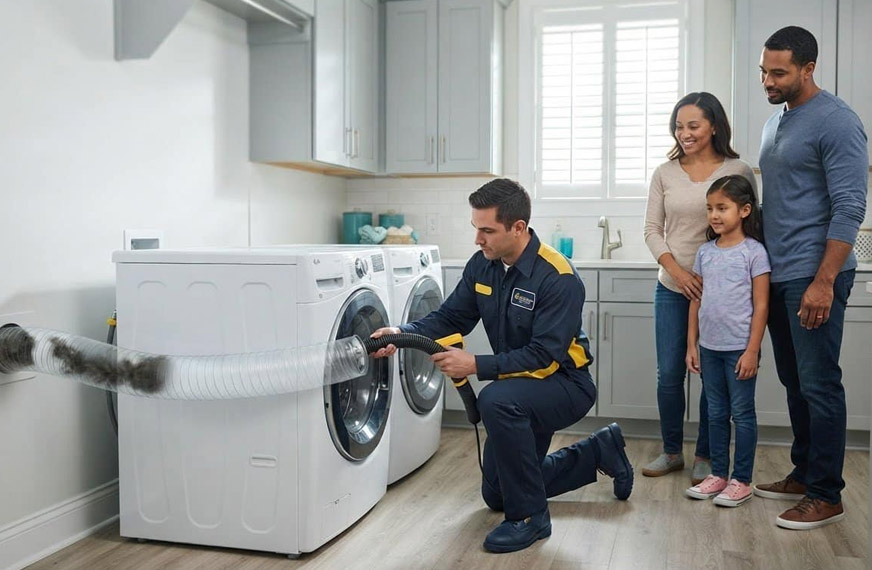
A clothes dryer is one of the most convenient appliances in a modern home, making it possible to dry laundry quickly and efficiently without depending on outdoor conditions. However, like other household appliances, a dryer needs regular care to continue operating properly. One area that is often overlooked is the vent system that carries warm, moist air away from the appliance. Over time, lint, dust, and other debris can collect inside the vent, restricting airflow and making the dryer work harder than necessary. Regular dryer vent cleaning can help maintain proper airflow, support efficient operation, and reduce the accumulation of combustible lint within the vent system. Understanding why this maintenance matters can help homeowners take better care of their appliances and recognize potential problems before they become more serious.
Why Dryer Vent Maintenance Matters
The dryer vent plays an important role in the overall operation of the appliance. During a drying cycle, the machine produces warm air and moisture that need to move through the vent and exit the home. When the passage is clear, air can move efficiently, allowing the dryer to complete its cycle more effectively. When lint and debris build up, airflow can become restricted, causing the appliance to operate for longer periods. This can increase energy consumption and place additional strain on components such as the heating system and motor. Regular dryer vent cleaning helps keep the pathway clear and allows the appliance to move heated air and moisture more effectively.
Understanding How Lint Builds Up
Lint is one of the most common materials found in a dryer vent, and its accumulation happens gradually during normal appliance use. Small fibers are released from clothing as garments tumble and are captured by the dryer’s lint filter. However, the filter does not necessarily catch every particle, meaning some lint can travel farther into the exhaust system. Over time, these particles can settle along the walls of the vent and combine with dust or other debris. The amount of buildup can depend on how frequently the dryer is used, the types of fabrics being dried, and the design and length of the vent system. Because accumulation may not be immediately visible, routine dryer vent cleaning is an important part of appliance maintenance.
Signs of a Restricted Vent
Homeowners can often recognize potential vent problems by paying attention to changes in dryer performance. One common sign is that clothing takes noticeably longer to dry than it did previously. The exterior of the dryer may also feel unusually warm during or immediately after operation. Another warning sign can be increased humidity or warmth in the laundry area because moist air is not leaving the appliance efficiently. Some dryers may also shut off unexpectedly or display warnings related to airflow, depending on the model. These symptoms do not always have the same cause, but they should not be ignored. When several signs occur together, dryer vent cleaning may be necessary to restore proper airflow and appliance performance.
How Blocked Vents Affect Efficiency
A restricted vent can make a dryer work harder to accomplish the same task. When warm, moist air cannot escape efficiently, the appliance may need additional time to remove moisture from clothing. Longer drying cycles mean the dryer may consume more energy and operate for extended periods. This can gradually increase utility costs while also placing additional stress on internal components. A dryer that repeatedly operates under restricted airflow may experience unnecessary wear over time. Keeping the vent system clear through regular dryer vent cleaning can support more efficient airflow and help the appliance perform closer to its intended operating conditions.
The Connection Between Lint and Fire Safety
Lint is lightweight and highly combustible, which makes its accumulation inside a heated appliance exhaust system a serious maintenance concern. A dryer produces heat during normal operation, so allowing substantial amounts of lint to collect in or around the vent is not a condition homeowners should overlook. Proper maintenance includes cleaning the lint filter after every load and periodically checking the exhaust system for signs of restriction or accumulation. Homeowners should also address damaged or improperly connected vent components because these can affect airflow and overall operation. Professional dryer vent cleaning can provide a more thorough approach when buildup extends beyond the areas that are easily accessible to the homeowner.
Cleaning the Lint Filter Regularly
One of the simplest maintenance steps is cleaning the dryer’s lint filter after every load. The filter is designed to capture lint before it enters the exhaust system, so keeping it clean supports better airflow and allows it to perform its intended function. A clogged filter can restrict airflow and may also increase drying time. Homeowners should remove visible lint from the screen and periodically inspect the filter for residue or buildup that may not be obvious at first glance. Fabric softener sheets and certain laundry products can sometimes leave a film on the filter, which may affect airflow. Consistent lint-filter maintenance should be combined with broader vent care for the best results.
Inspecting the Vent Hose
The flexible or rigid section connecting the dryer to the home’s exhaust system should also be inspected periodically. Homeowners should look for crushed sections, excessive bends, holes, loose connections, or other visible damage. A vent hose that is sharply bent or compressed can restrict airflow even if the rest of the system is relatively clean. Excessive length can also create additional opportunities for lint to collect. The vent should be configured according to the appliance manufacturer’s recommendations and applicable installation requirements. During dryer vent cleaning, a professional can examine accessible sections of the system and identify conditions that may be contributing to poor airflow.
Keeping the Exterior Vent Opening Clear
The exterior termination of the dryer vent is another area that should not be overlooked. This opening allows warm, moist air to leave the home, but it can become obstructed by lint, dirt, leaves, insects, or other outdoor debris. A blocked exterior opening can significantly reduce airflow and may cause symptoms similar to those associated with an internal blockage. Homeowners can periodically inspect the exterior area to make sure the flap or opening is able to operate correctly and is not covered by debris. Any damaged exterior cover should also be addressed. Keeping both the interior and exterior portions of the exhaust pathway clear is an important part of effective dryer maintenance.
Professional Cleaning Versus Basic Maintenance
Routine homeowner maintenance and professional service serve different purposes. Cleaning the lint filter and checking visible portions of the vent are simple tasks that can be performed regularly. However, the full exhaust system may extend through walls, floors, ceilings, or other difficult-to-access areas. Deep buildup in these sections may not be removable with basic household cleaning. Professional dryer vent cleaning can use specialized equipment designed to reach farther into the exhaust pathway and remove accumulated lint and debris. This can be particularly useful when a vent is long, has multiple bends, or has not been serviced for an extended period.
How Often Should Dryer Vents Be Checked?
The appropriate maintenance schedule can vary depending on how frequently the dryer is used and the design of the vent system. A household that runs several loads every day may experience faster lint accumulation than one that uses the appliance only occasionally. Longer vent systems or configurations with multiple turns may also require greater attention because lint has more places where it can settle. Homeowners should follow the appliance manufacturer’s maintenance recommendations and remain alert to changes in performance. Rather than relying exclusively on a fixed schedule, it is helpful to consider both usage patterns and warning signs. Regular dryer vent cleaning can then be incorporated into a broader household maintenance routine.
Improving Dryer Performance
A dryer that has adequate airflow can generally remove moisture from clothing more effectively than one operating with a restricted exhaust pathway. Improved airflow can help reduce unnecessarily long cycles and may allow clothing to dry more consistently. This does not mean that vent maintenance will solve every dryer performance issue because problems can also originate from heating elements, sensors, thermostats, motors, or other components. However, airflow should be considered whenever drying times change unexpectedly. Addressing vent restrictions is a relatively important part of troubleshooting poor drying performance. Routine dryer vent cleaning can help eliminate one common source of reduced efficiency and allow homeowners to determine whether additional appliance service is needed.
Protecting the Appliance
Proper vent maintenance can also contribute to the long-term care of the dryer itself. When airflow is restricted, the appliance may need to operate longer to achieve the same drying results. Repeated extended cycles can place additional demands on heating and mechanical components. While regular maintenance cannot prevent every mechanical failure, reducing avoidable operating strain is beneficial for an appliance that is used frequently. Homeowners should also avoid overloading the dryer because excessive loads can increase drying times and make it more difficult for air to circulate through the clothing. Combining proper loading habits with dryer vent cleaning can support more consistent operation and help maintain the appliance over time.
Avoiding Common Vent Problems
Several installation and maintenance issues can contribute to poor dryer ventilation. Excessively long vent runs, unnecessary bends, crushed hoses, disconnected sections, and inappropriate vent materials can all affect airflow. A vent system should be installed and maintained according to the dryer manufacturer’s requirements and applicable safety standards. Homeowners should not attempt major modifications without understanding the requirements of the appliance and exhaust system. If the vent appears damaged or poorly configured, a qualified professional can evaluate the system and recommend appropriate corrections. Addressing these underlying issues alongside dryer vent cleaning can provide a more complete approach to maintaining proper airflow.
Maintaining a Clean Laundry Area
The area surrounding the dryer should also be kept clean and organized. Lint and dust can accumulate behind and underneath appliances, particularly when cleaning is neglected for long periods. Clothing, cardboard, paper, cleaning products, and other combustible materials should not be stored directly around a heat-producing appliance. The dryer should have adequate clearance for ventilation and maintenance access according to its installation instructions. Periodically moving attention beyond the lint filter and looking at the entire laundry area can reveal problems that might otherwise go unnoticed. A clean environment complements regular dryer vent cleaning and contributes to better overall appliance maintenance.
When to Contact a Professional
Certain situations are better handled by a qualified professional rather than through DIY cleaning. If the dryer repeatedly overheats, takes significantly longer to dry clothes, produces unusual smells, or continues to show airflow problems after basic maintenance, professional evaluation may be appropriate. A professional can inspect portions of the exhaust system that are difficult to access and determine whether substantial buildup or installation problems are present. They can also identify damaged vent components that may require replacement. Professional dryer vent cleaning is especially useful when the system has a long or complicated configuration that cannot be effectively reached using basic household tools.
Establishing Better Laundry Habits
Good laundry habits can reduce unnecessary strain on the dryer and its exhaust system. Cleaning the lint filter after every load should become a routine step rather than an occasional task. Loads should be sized appropriately so that clothing has enough room to tumble and warm air can circulate. Wet items should also be spun adequately in the washing machine before being transferred to the dryer because excess moisture can extend drying time. Homeowners should avoid ignoring changes in performance and should investigate unusually long cycles promptly. Combining these habits with regular dryer vent cleaning creates a practical maintenance routine that supports efficiency and safety.
Long-Term Benefits of Proper Maintenance
Taking care of the dryer vent can provide benefits beyond shorter drying times. Maintaining an unobstructed exhaust pathway can support efficient airflow, reduce unnecessary operating time, and help the appliance perform consistently. Regular inspections can also make it easier to identify damaged hoses, loose connections, or exterior obstructions before they become more significant concerns. Maintenance is generally easier when small issues are addressed before substantial buildup or deterioration occurs. Homeowners should view dryer care as an ongoing responsibility rather than a one-time project. Consistent dryer vent cleaning, combined with routine appliance maintenance, can help protect both the dryer and the surrounding laundry area.
Final Thoughts
A dryer may seem like a simple appliance, but its performance depends on several components working together correctly. The exhaust system plays a particularly important role because it removes warm, moist air and allows the appliance to operate effectively. Lint accumulation, crushed vent hoses, blocked exterior openings, and other restrictions can interfere with this process and may contribute to longer drying cycles and unnecessary appliance strain. Homeowners can reduce these concerns by cleaning the lint filter regularly, monitoring dryer performance, inspecting accessible vent components, and arranging professional service when necessary. Making dryer vent cleaning part of a regular home maintenance routine is a practical way to support better airflow, appliance efficiency, and a safer laundry environment.

