


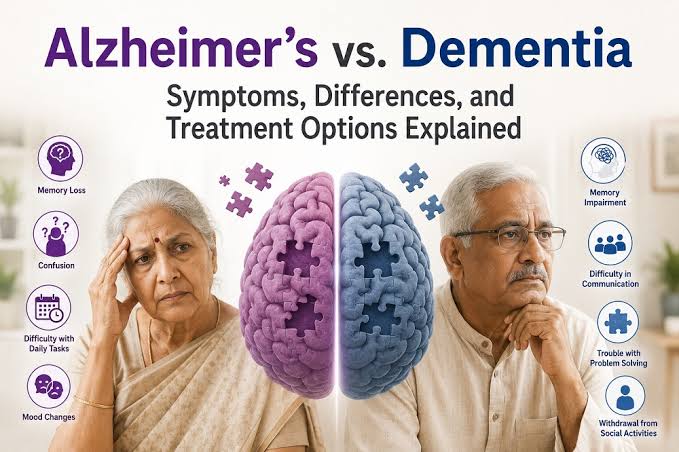
Many families use the words “dementia” and “Alzheimer’s” as if they mean the same thing. When a parent starts forgetting names, repeating questions, or getting lost on familiar roads, it is natural to wonder which one it is. Understanding dementia vs alzheimers is not just a matter of vocabulary. It shapes how doctors diagnose, how families plan, and what kind of care a loved one may need over time.
If you are already weighing care options for a parent, you can book a tour at Avalina Senior Living to see what a supportive, memory-focused community looks like in person.
Dementia vs Alzheimers: The Core Difference
The simplest way to understand dementia vs alzheimers is to think of one as the category and the other as a member of that category.
- Dementia is a general term for a decline in memory, thinking, and reasoning that is serious enough to interfere with daily life. It is a group of symptoms, not a single disease.
- Alzheimer’s disease is a specific brain disease that causes those symptoms. It is the most common cause of dementia, accounting for the majority of cases.
In other words, every person with Alzheimer’s has dementia, but not every person with dementia has Alzheimer’s. Other conditions, medications, and health problems can produce similar symptoms, which is why a proper medical evaluation matters so much.
Common Types of Dementia
Knowing the main types of dementia helps families understand why two people with “dementia” can look very different from each other.
- Alzheimer’s disease: gradual memory loss that worsens over time, often starting with trouble remembering recent events
- Vascular dementia: linked to reduced blood flow to the brain, often after strokes or small vessel damage, with problems in planning and judgment
- Lewy body dementia: can involve visual hallucinations, fluctuating alertness, and movement problems similar to Parkinson’s
- Frontotemporal dementia: often begins with personality, behavior, or language changes rather than memory loss
- Mixed dementia: a combination of two or more types, which is more common in older adults than many people realize
How the Symptoms Compare
Because dementia vs alzheimers overlap so heavily, symptoms alone rarely tell the full story. Still, some patterns are worth noticing.
Symptoms common to most forms of dementia
- Forgetting recent conversations or repeating the same questions
- Difficulty managing money, medications, or household tasks
- Trouble finding the right words
- Confusion about time, place, or familiar people
- Changes in mood, personality, or judgment
- Withdrawal from hobbies and social activities
Patterns more typical of Alzheimer’s
- Memory loss for recent events as the earliest and most prominent sign
- A slow, steady decline over several years
- Increasing difficulty with language, orientation, and recognizing loved ones as the disease progresses
Patterns that may point to other causes
- Sudden changes in thinking over days or weeks
- Early hallucinations or major behavior changes with relatively intact memory
- Symptoms that appear alongside strokes, infections, or new medications
Sudden confusion should always be checked by a doctor quickly, since some causes, such as infections, thyroid problems, vitamin deficiencies, and medication side effects, can be treated.
Understanding the Stages of Alzheimer’s Disease
Doctors often describe the stages of Alzheimer’s disease in three broad phases, although every person’s journey is different and the lines between stages are not sharp.
- Early stage (mild): occasional memory lapses, trouble finding words, misplacing items, and difficulty planning or organizing. Many people still live independently with some support.
- Middle stage (moderate): more confusion, changes in sleep and behavior, wandering, and the need for help with daily activities such as dressing and bathing. This is often the longest stage.
- Late stage (severe): limited communication, major physical decline, and the need for round-the-clock care.
Knowing where a loved one is in this progression helps families anticipate needs rather than react to emergencies.
How Dementia Gets Diagnosed
There is no single test that settles the question. A careful evaluation usually involves several steps:
- A review of symptoms and medical history, often with input from a family member
- Memory and thinking tests
- Blood tests to rule out treatable causes such as thyroid problems or vitamin deficiencies
- Brain imaging, such as an MRI or CT scan
- A medication review, since some drugs can affect memory and thinking
An early, accurate diagnosis separates dementia vs alzheimers from other conditions, opens the door to available treatments, and gives families more time to plan legal, financial, and care decisions together with their loved one.
Dementia Care Options for Families
Once a diagnosis is made, the next question is usually “what now?” The right level of support depends on the person’s stage, safety needs, and the family’s capacity. Common dementia care options for families include:
- Care at home with family support: often the first step, but demanding as needs grow
- In-home caregivers or adult day programs: adds help while keeping a familiar routine
- Assisted living: support with daily tasks, meals, and medications in a social setting
- Structured transitional programs: more guidance than standard assisted living, without a full move to secured memory care
- Memory care: a specialized, secure environment designed for people living with dementia
Many families move through more than one of these over time. Planning early, before a crisis, makes each transition easier.
Memory Care for Alzheimer’s Patients
As the disease progresses, safety and routine become the biggest concerns. Wandering, nighttime confusion, and changes in behavior can be hard to manage safely at home, even for devoted caregivers.
Quality memory care for Alzheimer’s patients usually includes:
- Secured spaces that reduce the risk of wandering
- Staff trained in dementia communication and behavior support
- Predictable daily routines that lower anxiety and confusion
- Activities designed around cognitive engagement and sensory comfort
- Closer supervision and personalized attention
Choosing memory care is not giving up. For many families it is the step that restores safety for the resident and rest for the caregiver.
How Avalina Supports Families Through Each Stage
At Avalina Senior Living in Sunrise, Florida, families do not have to choose between two extremes. The community offers Assisted Living, the Connections Program for residents who need more structured support, and a dedicated Memory Care program for those living with Alzheimer’s or other forms of dementia.
Having these options in one community means a resident can receive the right level of support today and adjust as needs change, without a disruptive move to an unfamiliar place. The Memory Care program focuses on cognitive therapies, a safe and secure setting, and personalized attention built around each resident’s stage.
Supporting a Loved One After a Diagnosis
A diagnosis can bring relief, grief, and fear all at once. Families often find that a few simple habits make daily life calmer for everyone involved.
- Keep routines consistent, since predictability reduces anxiety
- Speak in short, clear sentences and give one instruction at a time
- Avoid correcting or arguing, and respond to the feeling behind the words
- Use notes, labels, and calendars to support memory without making a person feel treated like a child
- Encourage gentle exercise, good nutrition, and time with people they enjoy
Staying patient is easier said than done, which is why caregivers also need support of their own.
Caring for the Caregiver
Family caregivers often put their own health last. Exhaustion, sleep loss, and isolation are common, and they can quietly wear down even the most devoted person. Consider these steps:
- Ask other family members to share specific tasks on a regular schedule
- Join a caregiver support group, in person or online
- Schedule your own medical appointments and time to rest
- Learn about respite services that allow short breaks from caregiving
- Treat guilt as a normal part of the process, not proof that you are failing
Looking after yourself is not selfish. A rested, supported caregiver is better able to give a loved one safe, loving care for longer.
Questions to Ask a Doctor
Going into an appointment prepared makes the visit far more useful. Consider asking:
- What do you think is causing these symptoms?
- Are there any treatable conditions we should rule out first?
- Which tests do you recommend, and what will they tell us?
- What changes should we expect in the next year?
- What local resources and support services are available for caregivers?
Bringing a written list of specific examples, such as missed bills or repeated questions, helps the doctor see the real picture.
Frequently Asked Questions
Is dementia the same as Alzheimer’s?
No, dementia is the broad term and Alzheimer’s is the most common cause.
Can dementia be reversed?
Some causes, like vitamin deficiencies or medication effects, are treatable, but most progressive forms are not reversible.
Does memory loss always mean dementia?
No, stress, poor sleep, depression, and normal aging can all affect memory.
When should we see a doctor?
See a doctor as soon as memory or thinking changes start affecting daily life.
Moving Forward
Learning the difference between dementia vs alzheimers will not change a diagnosis, but it will help your family ask better questions, plan earlier, and feel less lost. Every person’s path is different, and the best next step is almost always a conversation with a doctor followed by an honest look at what kind of support will keep your loved one safe, comfortable, and connected.
When you are ready to see what that support can look like day to day, you can schedule a tour and meet the team.

