


Efficient movement of products, raw materials, pallets, machinery, and other loads is an essential part of many commercial and industrial operations. Warehouses, distribution facilities, manufacturing environments, construction projects, and shipping operations all depend on dependable equipment to move materials from one location to another. When material movement is slow, disorganized, or dependent on unsuitable machinery, businesses can experience unnecessary delays that affect employees, production schedules, inventory management, loading activities, and customer orders. Selecting appropriate material handling equipment is therefore an important part of creating an organized and productive work environment. The right equipment can help employees move loads more efficiently while supporting appropriate lifting practices and reducing unnecessary manual effort. Because every facility has different layouts, load requirements, storage systems, and operating schedules, equipment selection should be based on the actual demands of the operation rather than relying on a one-size-fits-all approach.
Understanding the Role of Material Handling Systems
Material handling involves much more than simply lifting heavy objects. It includes receiving materials, unloading deliveries, transporting products across a facility, placing inventory into storage, retrieving stored items, supplying production areas, preparing orders, staging shipments, and loading outgoing products. Each stage can require different equipment depending on the weight and dimensions of the material, travel distance, storage height, aisle width, floor conditions, and frequency of movement. A well-planned handling system connects these activities so that materials can move through the facility without unnecessary interruptions. Businesses that regularly review their material movement processes may discover opportunities to improve equipment utilization, reduce unnecessary travel, reorganize storage areas, and select machinery that better matches specific tasks. Understanding how equipment fits into the complete workflow is especially important because a machine that performs well in one part of a facility may not be appropriate for another application.
Choosing Equipment According to the Application
Equipment selection should begin with a detailed understanding of the work that the machine will perform. Businesses should consider the typical load weight, maximum load weight, dimensions of the materials, required lifting height, travel distance, operating surface, and available maneuvering space. The frequency of use is another important consideration because equipment used continuously throughout a shift may have different requirements from machinery needed for occasional tasks. Indoor and outdoor applications can also require different equipment characteristics. Some operations may benefit from electric-powered machinery, while others may require internal-combustion equipment for demanding outdoor applications or heavier workloads. Narrow aisles may require specialized equipment designed for maneuverability and elevated storage access. By reviewing these factors before selecting machinery, businesses can create a more effective relationship between their equipment and their workflow. Professional equipment providers can also help businesses evaluate application requirements and identify suitable options based on the work being performed.
Improving Warehouse Efficiency
Warehouse efficiency depends heavily on how quickly and consistently materials can move between receiving areas, storage locations, picking zones, staging areas, and shipping departments. When equipment is properly matched to the warehouse layout, operators can complete routine movements more efficiently and spend less time working around unnecessary obstacles. Equipment selection can also influence how much storage space is available because certain machines are designed for environments with narrow aisles or high storage racks. Businesses should examine the relationship between equipment dimensions and facility design before introducing new machinery. Turning radius, mast height, load capacity, visibility, and travel paths can all influence how equipment performs in a warehouse. A carefully planned handling system can help reduce unnecessary movement while supporting better use of available floor and storage space. The objective should be to create a workflow in which equipment supports employees instead of creating additional obstacles for them.
Managing Heavy and Specialized Loads
Many businesses handle materials that cannot be moved efficiently through manual methods. Heavy machinery components, industrial products, construction materials, large pallets, and other substantial loads require equipment with appropriate capacity and configuration. Choosing equipment for heavy-duty applications requires careful attention to load weight and dimensions, lifting height, attachment requirements, and operating environment. A machine should be selected according to the actual characteristics of the loads it will handle rather than simply based on its maximum advertised capacity. Load distribution and center of gravity can also influence equipment performance, particularly when materials are unusually shaped or lifted to significant heights. Specialized attachments may be necessary for certain applications, but their use can affect equipment capacity and operating characteristics. Businesses should therefore communicate detailed application information to equipment professionals before selecting machinery for demanding lifting tasks.
Supporting Short-Term Operational Demands
Business requirements can change unexpectedly. A company may receive a large order, begin a temporary project, expand inventory, modify a production area, or experience an increase in shipping activity. These changes can create a need for additional equipment even when the existing fleet is normally sufficient. Purchasing additional machinery for a temporary increase in workload may not always be appropriate, especially when the additional capacity will not be required once the project is completed. Rental solutions provide businesses with another way to address temporary equipment requirements. Additional machinery can be obtained for a defined period and incorporated into the operation without necessarily becoming a permanent part of the fleet. This flexibility can be particularly useful for businesses that experience seasonal demand or work on projects with changing equipment requirements. A rental strategy can also provide replacement equipment when an existing machine is temporarily unavailable because of maintenance or repairs.
Supporting Long-Term Operational Requirements
Equipment rentals are not limited to short projects. Some businesses may need machinery for longer periods while they evaluate future fleet requirements, support an extended project, or manage changing operational conditions. Long-term rental arrangements can provide access to equipment while allowing businesses to maintain flexibility as their needs develop. This can be useful when a company is expanding but does not yet know how its long-term equipment requirements will change. It can also be valuable when a facility is being redesigned or when production levels are expected to fluctuate. Rather than making an immediate permanent investment in every required machine, businesses can evaluate actual utilization over time and use that information when making future fleet decisions. Long-term equipment planning should consider maintenance, service availability, operator requirements, storage, utilization, and eventual replacement needs so that the equipment strategy remains aligned with business objectives.
Reducing Disruptions Caused by Equipment Downtime
Reliable equipment is essential when material movement is directly connected to production and shipping schedules. If a critical machine becomes unavailable, employees may have difficulty moving materials, loading trucks, replenishing inventory, or supplying production areas. Even a relatively short interruption can create a chain of delays when multiple processes depend on the same equipment. Preventive maintenance, regular inspections, and timely repairs can help reduce unexpected equipment problems. Businesses should also establish clear procedures for reporting mechanical issues so that equipment concerns can be addressed before they become more serious. When a primary machine is unavailable, rental equipment can provide temporary capacity while repairs are completed. Maintaining access to replacement equipment can be especially valuable for operations where material movement cannot easily be postponed. A combination of maintenance planning and flexible equipment access can help businesses prepare for situations that might otherwise interrupt normal workflow.
The Importance of Professional Equipment Service
Equipment performance depends on more than selecting the right machine. Regular service is necessary to keep mechanical, electrical, hydraulic, and safety-related components in appropriate working condition. Maintenance requirements vary according to equipment type, manufacturer recommendations, operating hours, workload, and environmental conditions. Businesses should maintain service records and follow appropriate maintenance schedules so technicians can identify recurring problems and understand the history of each machine. Professional technicians can inspect equipment, diagnose problems, replace worn components, and perform necessary repairs. A provider that offers both equipment and aftermarket support can make it easier for businesses to coordinate service needs. Tri-Lift Industries provides equipment service, planned maintenance, fleet management, and repair support as part of its broader material handling services, helping businesses address equipment needs beyond the initial acquisition or rental process.
Maintaining Access to Replacement Parts
Parts availability can have a direct effect on equipment downtime. Even a relatively straightforward repair may take longer if the necessary component is difficult to obtain. Businesses operating multiple brands and equipment types may require access to a broad selection of replacement parts. Common components such as tires, filters, hoses, hydraulic parts, batteries, brakes, forks, chains, and electrical components may eventually require replacement due to normal wear or equipment use. Working with an equipment provider that can help identify and source appropriate parts can simplify the maintenance process. Tri-Lift Industries provides parts support for a variety of equipment makes and models and offers different parts options depending on the application and requirements. Reliable parts support can help technicians complete necessary repairs more efficiently and can contribute to maintaining equipment availability over the long term.
Considering Operator Training and Workplace Practices
Equipment can only provide its intended benefits when operators understand how to use it correctly. Businesses should provide appropriate training and ensure operators understand the controls, operating limitations, inspection requirements, load-handling practices, and workplace procedures associated with the equipment they operate. Employees should also understand how to interact safely with moving equipment, pedestrians, loading areas, storage racks, and other workplace hazards. Operator training should be supported by regular communication and consistent workplace expectations. Equipment inspections can help identify visible damage or operating concerns before a machine is used. Businesses should establish procedures for reporting problems and removing equipment from operation when necessary. Professional training services can provide additional assistance to companies seeking to establish consistent operator practices. Tri-Lift Industries offers forklift operator training intended to help businesses support proper equipment operation and workplace safety requirements.
Selecting Equipment for Narrow and Confined Areas
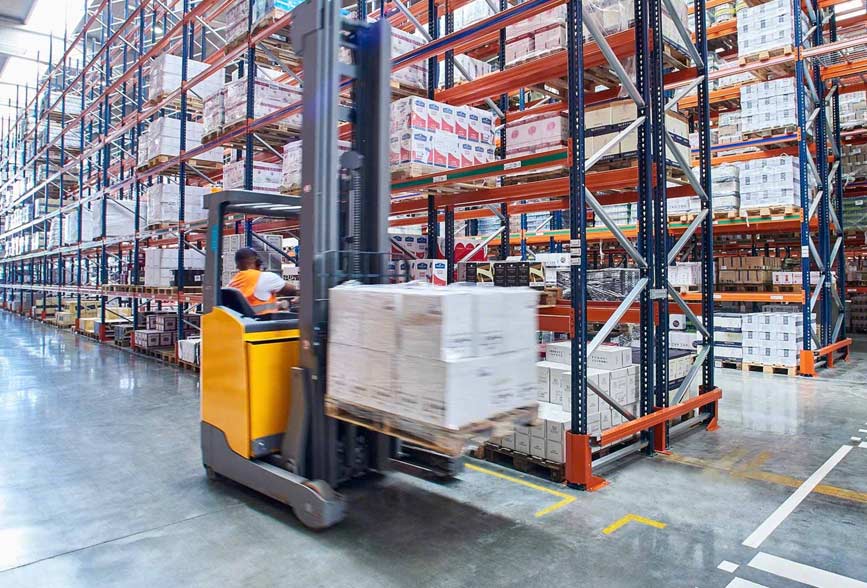
Facility layout can significantly affect equipment selection. Warehouses with narrow aisles, high storage racks, or restricted maneuvering areas may require equipment designed specifically for those conditions. A conventional forklift may not provide the maneuverability required in every storage environment, particularly when aisle widths are limited or inventory is stored at considerable heights. Narrow-aisle equipment can provide businesses with additional options for maximizing storage capacity while maintaining practical access to inventory. Before selecting equipment, businesses should measure aisle widths, rack dimensions, turning areas, doorways, loading zones, and other physical restrictions. The height and width of the equipment must be compatible with the facility, while visibility and load handling capabilities should also be considered. Matching equipment to the physical environment can reduce operational complications and make material movement more predictable.
Integrating Equipment With Fleet Management
Businesses with multiple machines can benefit from a structured fleet management approach. Rather than evaluating each machine separately, management teams can review equipment utilization, maintenance costs, operating hours, repair frequency, and availability across the entire fleet. This information can identify which machines are heavily used, which units remain underutilized, and where additional capacity may be needed. Fleet management can also help businesses plan equipment replacements before older machines become unreliable. Rental equipment can supplement an existing fleet when temporary capacity is required, while service and maintenance programs can support the machines that are used continuously. A coordinated approach can make it easier to balance equipment availability and operational demand. Regular fleet reviews can also help businesses identify opportunities to improve workflow by relocating equipment, adjusting storage practices, or introducing specialized machinery for specific tasks.
Balancing Productivity and Equipment Costs
Equipment decisions should consider both operational requirements and overall ownership or rental costs. The purchase price of a machine represents only one part of its long-term financial impact. Maintenance, repairs, parts, energy or fuel, tires, operator training, storage, insurance, and eventual replacement can also contribute to equipment expenses. Rental arrangements may provide businesses with a way to obtain additional capacity while avoiding some of the long-term commitments associated with ownership. However, the appropriate approach depends on how frequently the equipment is needed, how long it will be used, and how the business manages its fleet. Companies should evaluate their expected utilization and consider both immediate and long-term requirements. A thoughtful equipment strategy can help businesses allocate resources while ensuring that employees have access to appropriate machinery for the work they need to complete.
Creating a Flexible Material Movement Strategy
Modern businesses need equipment strategies that can adapt to changing workloads and operating conditions. Production volumes can increase, storage systems can change, new contracts can create additional demand, and facility expansions can introduce entirely different material movement requirements. A flexible strategy allows businesses to respond to these changes without having to redesign their entire equipment fleet every time operational conditions shift. Material handling equipment can support a wide range of applications when businesses select machines according to load requirements, facility conditions, operating schedules, and workflow demands. Tri-Lift Industries offers equipment solutions along with rental programs, service, parts, training, fleet management, and other support designed around material handling operations. Combining equipment access with professional support can make it easier for businesses to maintain reliable operations while adapting to future requirements.
Preparing for Future Equipment Needs
Long-term planning can help businesses avoid making rushed equipment decisions when new requirements arise. Companies should periodically review their workload, equipment utilization, facility layout, maintenance records, and upcoming projects. If a business expects production to increase or a facility to expand, equipment requirements should be considered early so the appropriate machines can be identified before they become urgently needed. Businesses can also evaluate whether certain equipment categories would improve storage efficiency or reduce unnecessary travel within the facility. Keeping accurate records of equipment performance can provide useful information for future purchasing or rental decisions. Planning ahead gives management more time to compare options, understand operating requirements, arrange training, and coordinate delivery or service support. A proactive equipment strategy can make the transition easier when operational demands change.
Conclusion
Efficient material movement requires careful coordination between equipment, employees, facility design, maintenance practices, and operational planning. The right machinery can help businesses move heavy loads, organize inventory, support production, improve warehouse workflows, and maintain consistent loading and unloading processes. However, equipment selection should always be based on the specific application, including load capacity, lifting height, operating environment, facility dimensions, usage frequency, and expected workload. Flexible rental solutions can provide additional capacity for temporary projects, seasonal demand, equipment replacement, and changing business requirements, while professional service and parts support can help maintain equipment reliability over time. Operator training and proper workplace procedures are equally important because dependable equipment must be supported by knowledgeable and properly trained personnel. By taking a complete approach to equipment planning, businesses can develop a material handling strategy that supports productivity, flexibility, equipment availability, and long-term operational needs without relying on a single solution for every application.

