


Modern heating and cooling technology has changed the way homeowners and businesses manage indoor comfort. Traditional HVAC systems can be highly effective, but they are not always practical for every building. Homes without existing ductwork, renovated spaces, additions, garages, offices, and individual rooms may require a more flexible approach. This is where ductless heating and cooling systems have become an increasingly practical option. These systems are designed to provide targeted temperature control without requiring an extensive network of air ducts throughout the building.
A ductless system consists of an outdoor condenser or heat pump connected to one or more indoor air-handling units. Refrigerant lines, electrical connections, and a condensate drain connect the indoor and outdoor components. Because the system does not depend on traditional ductwork, it can be installed in spaces where conventional central air conditioning or forced-air heating would be difficult or expensive to introduce. However, getting the best results depends on proper planning, accurate sizing, professional workmanship, and regular maintenance.
For property owners considering this type of upgrade, understanding the installation process and the factors that influence performance can make the decision much easier. A professional ductless system installation begins with evaluating the property, determining heating and cooling requirements, selecting suitable equipment, and identifying the most effective locations for indoor and outdoor components. When these steps are completed correctly, a ductless system can provide reliable comfort, efficient operation, and greater control over individual areas of a property.
Understanding How Ductless Systems Work
Ductless systems operate on the same basic refrigeration principles used by many conventional heat pumps and air conditioners. The outdoor unit contains important components such as the compressor and condenser coil, while the indoor unit contains the evaporator coil, blower, filters, and controls. Refrigerant travels between the indoor and outdoor components through a small line set, allowing heat to be transferred out of the building during cooling operation.
Many modern ductless systems are heat pumps, which means they can provide both cooling and heating. During the cooling cycle, the system removes heat from indoor air and transfers it outdoors. During heating operation, the refrigeration cycle reverses, allowing the system to absorb heat from outdoor air and bring that heat indoors. This dual-purpose operation makes ductless heat pumps a versatile choice for year-round temperature management.
Another important feature is zoning. A single outdoor unit can often support multiple indoor units, depending on the equipment and design requirements. Each indoor unit may have its own thermostat or control settings, allowing occupants to adjust temperatures in individual rooms or zones. Instead of conditioning an entire property to one temperature, a properly designed system can provide comfort where it is actually needed.
Why Proper Planning Matters
The performance of a ductless system depends heavily on the planning that takes place before installation. Choosing equipment based solely on the size of a room or the advertised capacity of a unit can lead to poor results. A system that is too small may struggle to maintain comfortable temperatures, while one that is too large may cycle frequently and fail to control humidity effectively.
A professional assessment considers several factors, including the size and layout of the building, insulation levels, window placement, ceiling height, occupancy, air leakage, and the local climate. The purpose of each room also matters. A bedroom, kitchen, living room, workshop, and office can have very different heating and cooling requirements even when they have similar floor areas.
Indoor unit placement also deserves careful consideration. The unit should be positioned where air can circulate effectively without creating uncomfortable drafts. Furniture, walls, doors, and other obstacles can affect airflow. The outdoor unit requires sufficient clearance for proper ventilation and service access. It should also be installed on a stable surface that helps minimize vibration and protects the equipment from unnecessary environmental exposure.
Taking time to plan these details can improve comfort and reduce the possibility of expensive modifications later. Good planning also makes future maintenance easier because technicians can access the equipment without unnecessary obstacles.
Choosing the Right Equipment
Ductless systems are available in a wide range of capacities, efficiency ratings, configurations, and features. Selecting the appropriate equipment requires more than simply choosing a familiar brand. The system should match the property’s heating and cooling demands while also fitting the owner’s budget, comfort expectations, and long-term operating goals.
Energy efficiency is an important consideration. Higher-efficiency systems may have a greater initial purchase price, but they can potentially reduce energy consumption over their operating life. When comparing equipment, property owners should consider efficiency ratings, expected usage, available features, warranty coverage, and maintenance requirements rather than focusing only on the initial cost.
Variable-speed technology can also provide important benefits. Instead of operating continuously at one fixed capacity, variable-speed equipment can adjust output according to changing demand. This can provide more consistent temperatures, reduce unnecessary cycling, and improve overall operating efficiency.
For properties requiring multiple zones, a multi-zone configuration may be appropriate. However, the number and placement of indoor units should be determined by the building’s layout and comfort requirements. Adding more indoor units is not automatically better. The system must be properly matched and configured so that the outdoor equipment can support the connected indoor units effectively.
The Installation Process
A professional ductless system installation generally involves several stages, and each stage contributes to the final performance of the equipment. The process typically begins with a property assessment and equipment selection. Once the appropriate system has been determined, the installer identifies locations for the indoor and outdoor components.
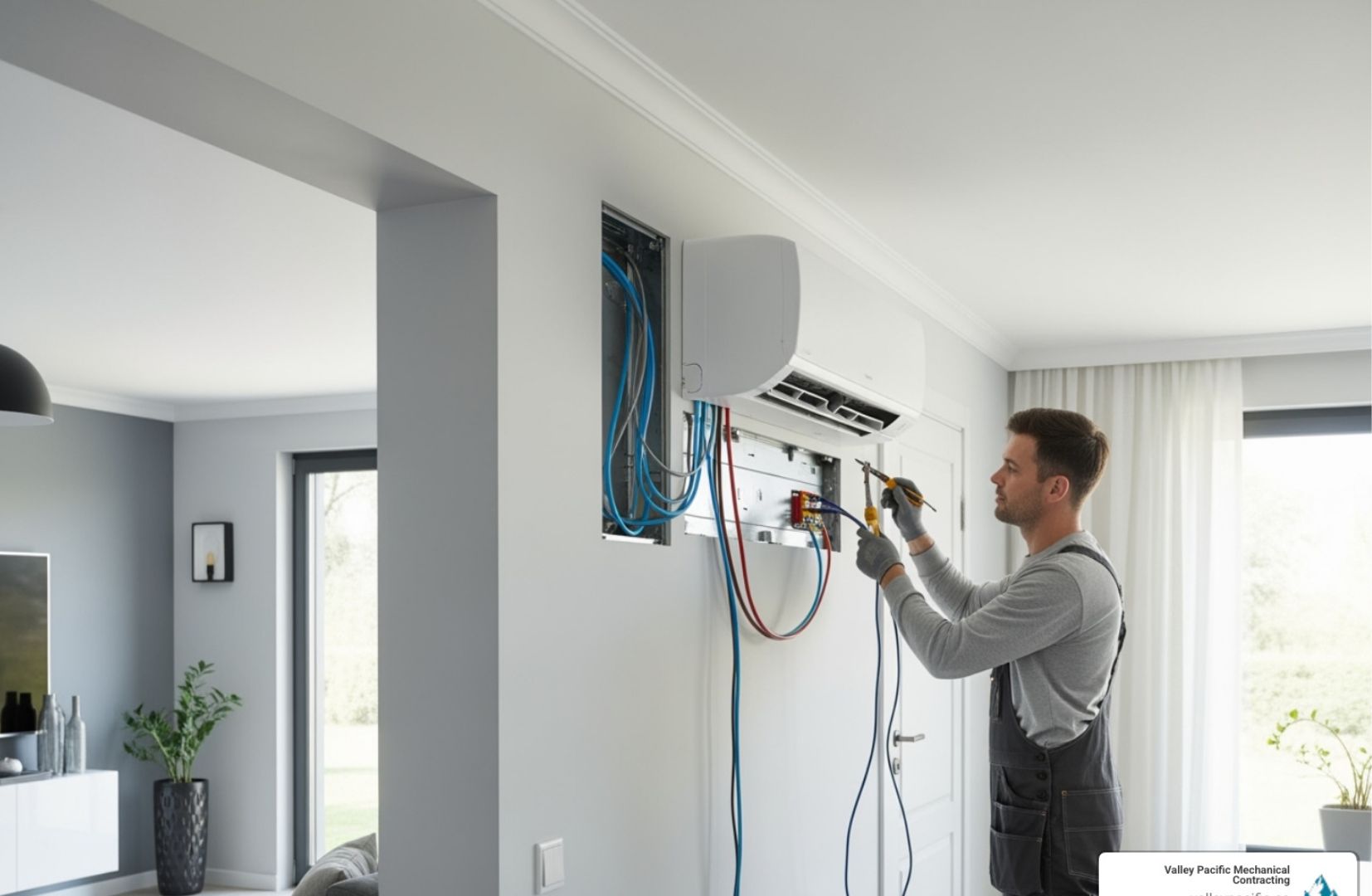
The indoor unit is securely mounted to a wall, ceiling, or other approved location depending on the equipment design. The outdoor unit is positioned on a suitable base or mounting structure. Installers then establish the route for the refrigerant lines, communication wiring, power connections, and condensate drainage.
The line set must be installed carefully to protect it from damage and prevent unnecessary bends or restrictions. Connections need to be properly sealed, and the refrigeration circuit must be handled according to manufacturer specifications. Depending on the system, installers may need to evacuate the lines, test for leaks, and verify that the refrigerant circuit is operating correctly.
Electrical connections are another critical part of the process. The system must receive the correct electrical supply, and wiring should be installed according to applicable electrical requirements and manufacturer instructions. Proper grounding and circuit protection are essential for safe operation.
Once the physical installation is complete, the system is tested. The installer should verify airflow, temperature performance, controls, drainage, refrigerant operation, and other relevant functions. A final inspection can identify problems before the equipment is placed into regular service.
Advantages of Going Ductless
One of the primary advantages of ductless technology is flexibility. Because the system does not require extensive ductwork, it can be suitable for buildings where installing ducts would involve major construction. This can be particularly useful for older properties, additions, converted spaces, and individual rooms that were previously difficult to condition.
Ductless systems can also provide room-by-room control. With a properly designed multi-zone configuration, occupants can adjust different areas according to their individual preferences and schedules. Rooms that are rarely used do not necessarily need to be conditioned in the same way as frequently occupied spaces.
Another potential benefit is improved energy efficiency. Traditional ducted systems can lose energy through ductwork, particularly when ducts pass through unconditioned areas. Eliminating this distribution network can reduce certain types of energy loss. However, actual efficiency depends on equipment selection, installation quality, building insulation, operating habits, and maintenance.
The compact nature of indoor units can also make them easier to incorporate into many interior designs. Although the units remain visible, modern models are generally designed with a streamlined appearance and may be installed in locations that provide effective airflow without dominating the room.
Common Installation Mistakes to Avoid
Even high-quality equipment can perform poorly if it is installed incorrectly. One common mistake is selecting equipment without conducting a proper load assessment. Oversized and undersized systems can both create comfort and efficiency problems.
Another issue is poor indoor unit placement. Installing a unit behind furniture, too close to an obstruction, or in a location that prevents proper airflow can reduce performance. The outdoor unit also requires adequate clearance. Blocking airflow around the condenser can increase operating strain and negatively affect efficiency.
Improper refrigerant-line installation can create serious performance issues as well. Lines should be installed, connected, evacuated, and tested according to the equipment manufacturer’s requirements. Shortcuts during this stage can contribute to refrigerant leaks, reduced capacity, compressor problems, or premature equipment failure.
Drainage should not be overlooked either. Indoor units produce condensate during cooling operation, and that water must be directed safely away from the equipment. Poor drainage can lead to water damage, unpleasant odors, or moisture-related problems.
Finally, some property owners may focus heavily on equipment cost while overlooking installation quality. The installation is not simply a delivery service for the equipment; it is a major part of how the system will operate for years. Professional workmanship can help protect the equipment investment and reduce avoidable service problems.
Maintenance for Long-Term Performance
Regular maintenance is essential for keeping a ductless system operating efficiently. Filters should be inspected and cleaned according to the manufacturer’s recommendations. Dirty filters restrict airflow and can make the system work harder than necessary. Depending on the environment and usage level, filters may require more frequent attention.
Indoor coils, blower components, and condensate pathways should also be inspected periodically. Dust and debris can accumulate over time, particularly in homes or businesses with high occupancy, pets, construction activity, or other sources of airborne particles.
The outdoor unit should be kept clear of leaves, vegetation, dirt, and other debris. Adequate airflow around the outdoor coil is important for heat transfer. Seasonal inspections can help identify developing issues before they become major failures.
Professional servicing can also include checking electrical connections, refrigerant-related components, system pressures, drainage, controls, and overall operating performance. Preventive maintenance does not eliminate every possible problem, but it can help identify worn or damaged components early and support consistent performance.
Improving Efficiency Through Everyday Habits
Equipment efficiency is only one part of overall energy performance. Everyday operating habits also influence how much energy a ductless system consumes. Setting reasonable temperatures and avoiding constant extreme adjustments can help maintain stable operation.
Keeping doors and windows closed while the system is operating can reduce unnecessary heat exchange with the outdoors. Proper insulation and weather sealing can further reduce heating and cooling demands. Curtains, blinds, and other window treatments may also help manage solar heat gain in warm conditions.
Using zoning features effectively can provide additional advantages. Instead of conditioning every room equally, occupants can focus heating or cooling on areas that are actually being used. Programmable or smart controls can make this process easier by allowing schedules to be adjusted automatically.
These practices work best when combined with properly sized equipment and a well-designed building envelope. A highly efficient system cannot compensate completely for severe insulation deficiencies, major air leaks, or other structural problems.
When Professional Installation Is Worth Considering
A ductless system may appear relatively simple because the indoor units are compact and there is no extensive duct network. However, the system still involves electrical work, refrigerant handling, drainage, mounting, airflow considerations, and equipment commissioning. Professional installation can help ensure that these elements are handled correctly.
Experienced installers can also identify potential issues that may not be obvious to property owners. They can evaluate equipment placement, calculate heating and cooling requirements, determine suitable line-set routes, and verify that the system operates according to manufacturer specifications.
Professional installation can also protect warranties in situations where manufacturers require installation by qualified personnel. More importantly, correct installation helps establish the foundation for reliable operation. Even premium equipment may experience reduced performance when important installation procedures are skipped or performed incorrectly.
When requesting an installation estimate, property owners should ask what is included in the service. The estimate should ideally address equipment, mounting, line-set installation, electrical requirements, drainage, system testing, commissioning, and cleanup. Clear communication at the beginning can reduce misunderstandings and unexpected costs.
Understanding the Long-Term Value
The value of a ductless system should be evaluated over its expected service life rather than solely by its initial purchase price. Energy consumption, maintenance, comfort, equipment reliability, and future repair needs can all influence the total cost of ownership.
A properly designed ductless system installation can create a heating and cooling solution that is flexible enough to adapt to changing needs. For example, a property owner may initially install a single indoor unit for an additional or frequently used room and later expand the system if the equipment supports additional zones. This flexibility can be useful when property layouts change over time.
Long-term value also depends on maintenance and operating conditions. A well-maintained system generally has a better opportunity to deliver consistent performance than equipment that is neglected. Regular filter care, professional inspections, and prompt attention to unusual noises, odors, leaks, or performance changes can all contribute to better system management.
Signs That a System Needs Attention
Property owners should pay attention to changes in how their ductless equipment operates. Weak airflow, unusual noises, inconsistent temperatures, unexplained increases in energy consumption, water around an indoor unit, or repeated shutdowns can indicate that professional service is needed.
A system that struggles to reach the selected temperature may have several possible causes, including dirty filters, blocked airflow, incorrect settings, refrigerant-related problems, or mechanical issues. It is generally better to investigate these symptoms early rather than continue operating equipment that appears to be malfunctioning.
Unusual odors should also be taken seriously. While budget, expected operating schedule, and future plans for the property. A system that works well for one building may not be appropriate for another, even system, strategically positioned indoor units, secure outdoor equipment, correctly installed refrigerant lines, safe electrical connections, and effective some smells may result from dust or temporary conditions, persistent odors can indicate moisture, contamination, or other maintenance concerns. Professional inspection can help determine the source and appropriate solution.
Final Considerations Before Installation
Before moving forward, property owners should consider their comfort requirements, building layout, budget, expected operating schedule, and future plans for the property. A system that works well for one building may not be appropriate for another, even when the floor areas are similar.
The quality of the design and installation is just as important as the equipment itself. A properly selected system, strategically positioned indoor units, secure outdoor equipment, correctly installed refrigerant lines, safe electrical connections, and effective drainage all contribute to successful operation.
Choosing ductless system installation as a solution can offer flexibility for properties that do not have conventional ductwork or that require independent temperature control in specific areas. However, the strongest results come from treating the project as a complete heating and cooling design rather than simply purchasing an air-conditioning unit.
With careful planning, professional installation, suitable equipment, and routine maintenance, ductless technology can provide dependable comfort while supporting efficient energy use. Understanding the system before installation allows property owners to ask better questions, compare appropriate options, and avoid common problems. Whether the goal is to improve comfort in a single room, condition a newly renovated space, or create multiple temperature zones, a thoughtfully designed system can provide equipment hanging on a wall. It depends on correct sizing, thoughtful placement, quality workmanship, proper commissioning, and ongoing care. When each part of the process receives appropriate attention, the result can be a comfortable, efficient, and adaptable heating practical approach to modern indoor climate control.
Ultimately, successful ductless system installation is built around more than the equipment hanging on a wall. It depends on correct sizing, thoughtful placement, quality workmanship, proper commissioning, and ongoing care. When each part of the process receives appropriate attention, the result can be a comfortable, efficient, and adaptable heating and cooling solution designed to serve the property for years to come.

