


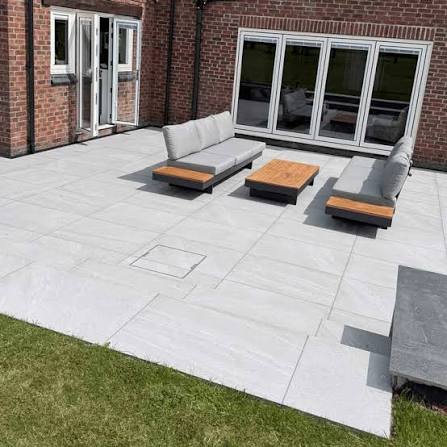
Outdoor surfaces take a level of punishment that most interior finishes never face. Rain, frost, direct sun, foot traffic, and the slow work of thermal expansion all act on a surface simultaneously, often across years of seasonal cycling. When a tile installation begins to crack, lift, or discolor before the fifth year of use, the instinct is often to blame the installer or the adhesive. More often, the problem starts much earlier — with the tile specification itself.
Across commercial properties, residential developments, and public infrastructure, outdoor tile failure is more common than most project owners anticipate. It generates real costs: removal, substrate repair, replacement materials, labor, and in some cases liability when surfaces become unsafe. Understanding why outdoor tile fails — and what distinguishes materials that hold up from those that do not — is a practical concern for anyone responsible for long-term building performance.
What Makes Exterior Tile Different from Interior Tile
The distinction between interior and exterior tile is not cosmetic. It reflects fundamentally different physical requirements. When specifying exterior porcelain tile, the relevant performance factors involve water absorption, frost resistance, surface texture, and structural density — not appearance alone. A tile that performs well indoors may be entirely unsuitable outside, even if it looks identical to a rated exterior product.
The Role of Water Absorption in Outdoor Performance
Water absorption is the single most important technical characteristic distinguishing exterior-rated tile from standard tile. When a tile absorbs water — even in small amounts — that water becomes a structural threat in freezing conditions. As water expands during the freeze cycle, it creates internal pressure within the tile body. Over repeated freeze-thaw cycles across seasons, this pressure causes micro-fractures that worsen incrementally until the tile cracks, chips, or separates from its substrate.
Porcelain, when manufactured correctly, has a very low absorption rate, which is why it performs reliably in outdoor environments where ceramic or natural stone would degrade more quickly. However, not all products labeled as porcelain meet the standards required for exterior use. Some products marketed for general use sit above the absorption threshold that makes sustained outdoor performance realistic. This is where specification matters more than product names or visual presentation.
Surface Texture and Slip Resistance Under Real Conditions
Outdoor surfaces are routinely wet. Morning dew, rain, pooled water near drainage points, and irrigation all create conditions where slip resistance becomes a safety issue rather than a comfort preference. An outdoor tile must maintain traction when wet, which requires deliberate surface texture rather than the polished or lightly textured surfaces common in interior applications.
The challenge is that texture must be calibrated. A surface that is too aggressive accumulates dirt and organic matter, becoming difficult to clean and eventually harboring biological growth. A surface that is too smooth becomes hazardous when wet. Exterior-rated tile is manufactured with this balance in mind, and slip resistance ratings exist to help specifiers match tile to the specific use environment — a pool deck, a commercial entrance, a rooftop terrace, or a public walkway all carry different exposure and traffic profiles.
Why Standard Installation Methods Are Not Enough Outside
Even correctly rated tile will fail prematurely if the installation approach treats an outdoor project the same way as an interior one. Outdoor tile systems are composite assemblies. The tile, adhesive, grout, substrate preparation, and drainage design all interact, and a weakness in any layer affects the performance of the whole. Many five-year failures trace not to the tile itself but to installation decisions that ignored the specific demands of outdoor exposure.
Substrate Movement and Its Consequences
Concrete substrates move. Temperature changes cause expansion and contraction. Ground settlement shifts slabs. Structural vibration, particularly in commercial or high-traffic settings, creates ongoing stress. When tile is bonded directly to a moving substrate without adequate accommodation for that movement, the bond eventually breaks. The tile may remain in place visually for some time, but it has separated from the adhesive bed beneath it — a condition called debonding — which eventually leads to cracking, hollowing, and surface displacement.
Movement joints are not optional in exterior tile installations. They are functional components of the system. Their spacing, depth, and the material used to fill them must be matched to the scale of the installation and the anticipated range of movement. Projects that omit or minimize movement joints to save cost or simplify layout are accepting a known risk of early failure.
Drainage Design and Water Management Beneath the Surface
Water that reaches the substrate layer and cannot escape does sustained damage. It degrades adhesive bonds, promotes biological growth, and accelerates the freeze-thaw damage described earlier. Proper drainage in an exterior tile installation involves both the visible surface slope and the management of water within the system — how it drains away from below the tile as well as off the surface.
In many failed installations, the tile itself performed as specified, but water was allowed to accumulate beneath it due to inadequate slope, blocked drainage paths, or substrate preparation that created low points where water collected. Over time, this standing water became the primary driver of damage. Specifying the right tile is necessary, but it is not sufficient without equivalent attention to how the whole installation manages water across its full service life.
The Specification Problem in Practice
The outdoor tile market contains a wide range of products at varying price points, and not all of them are what their descriptions suggest. Products are sometimes labeled with terms like “outdoor use,” “weather resistant,” or “suitable for exterior applications” without meeting the technical thresholds that make those claims meaningful. Procurement decisions made on price, aesthetics, or general category descriptions — without reference to verified ratings — are a primary driver of premature failure.
Standards bodies such as the International Organization for Standardization have established technical classifications for ceramic and porcelain tile products, including requirements specific to frost resistance and water absorption that form the basis for exterior suitability. Specifiers and project managers who verify that a product meets applicable standards before purchase are not being overly cautious. They are doing what is required to avoid a predictable outcome.
The Gap Between Visual Quality and Technical Performance
Tile products vary significantly in manufacturing quality even within the same visual category. Two tiles with identical appearance, similar dimensions, and comparable pricing may have very different absorption rates, density, and freeze-thaw resistance depending on how they were manufactured — specifically the clay body composition, firing temperature, and process controls applied during production. These differences are not visible to the eye and do not become apparent until the material is exposed to real outdoor conditions over time.
This is why relying on appearance or even general reputation when selecting outdoor tile introduces risk that documented ratings remove. A tile carrying verified frost-resistance certification has been tested under controlled conditions that simulate field exposure. One without that certification may perform adequately or may not — and the difference only becomes clear years into an installation that is difficult and expensive to replace.
Long-Term Cost and the Economics of Getting It Right
The upfront cost of correctly rated exterior tile is sometimes higher than unrated alternatives. This difference rarely survives a full cost comparison when the analysis includes realistic failure scenarios. A tile installation that requires partial or full replacement within five years carries the cost of new materials, removal of the failed installation, substrate repair if debonding has caused damage, and labor — often under conditions less favorable than the original installation. In commercial or public settings, there is also the cost of disruption to building operations, tenant relationships, or public access.
Specified correctly, an outdoor porcelain tile installation should perform reliably for decades with routine maintenance. The materials designed for this purpose are not significantly more complex to install than general tile, and they do not require unusual maintenance. What they require is that the specification process treat outdoor installation as a distinct technical category rather than an extension of interior work with slightly different aesthetic requirements.
Closing Considerations
Outdoor tile failure within five years is not an unavoidable outcome of working in a difficult environment. It is most often the result of specification and installation decisions that did not account for what outdoor exposure actually demands from a surface material. The combination of rated tile, installation methods matched to outdoor conditions, and proper water management creates systems that hold up. The absence of any one of these elements introduces risk that typically materializes on a predictable timeline.
For anyone involved in specifying, procuring, or managing outdoor tile installations — whether on a single residential project or across a portfolio of commercial properties — the central lesson is straightforward. Outdoor tile is a technical product category, not simply a weatherproof version of interior tile. Treating it as such, from the initial specification stage through installation and maintenance, is what separates installations that last from those that generate replacement costs before the decade is out.

