


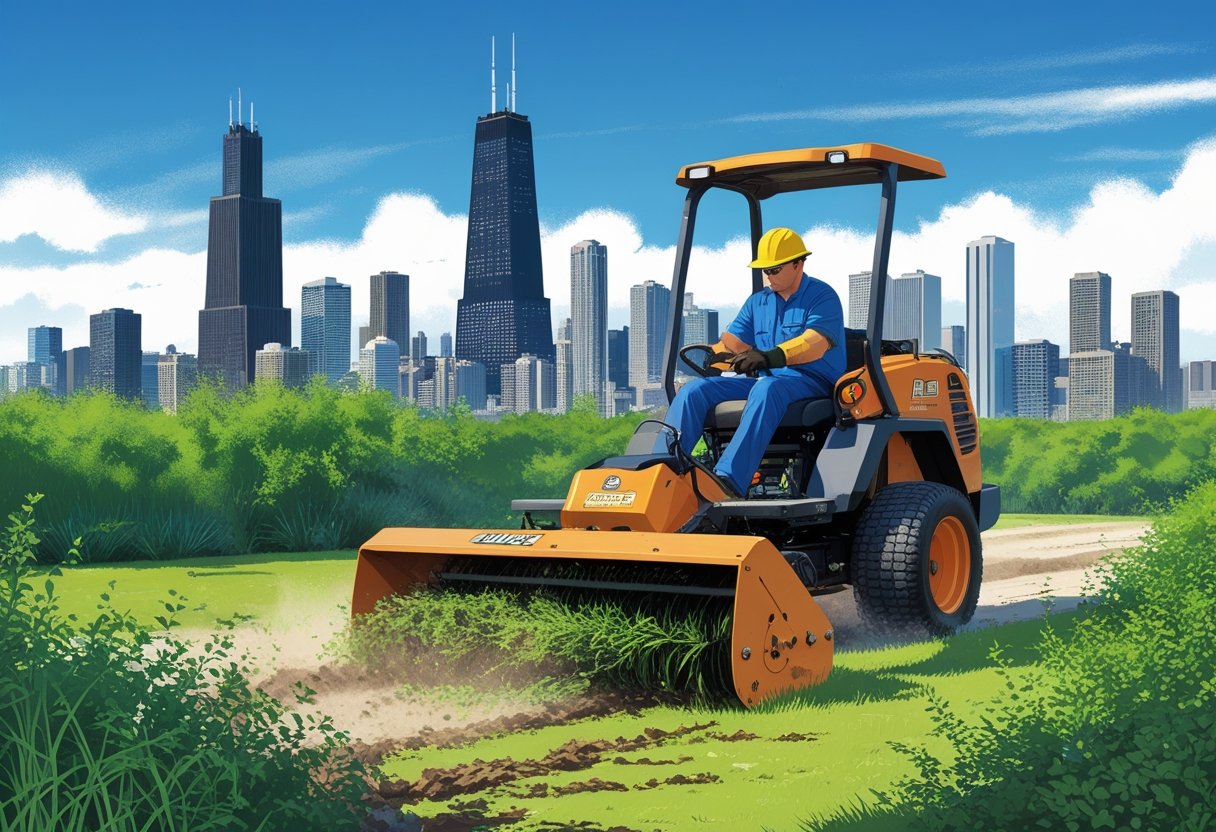
Overgrown land can quickly become difficult to manage when grass, weeds, brush, vines, and unwanted vegetation are allowed to grow without regular maintenance. Areas that once required only occasional mowing can eventually develop dense vegetation that standard lawn equipment cannot handle effectively. Brush hogging provides a practical solution for managing these challenging areas by using heavy-duty mowing equipment designed to cut through thick grass, weeds, small woody plants, and other dense growth. It is commonly used to reclaim neglected land, maintain large properties, improve visibility, reduce fire hazards, and prepare areas for future landscaping or construction.
Unlike conventional lawn mowing, brush hogging is intended for rough terrain and vegetation that is too dense, tall, or tough for ordinary residential mowers. The equipment typically uses a powerful tractor-mounted rotary cutter capable of handling demanding conditions. When performed correctly, the process can significantly improve the appearance and usability of a property while helping prevent overgrown vegetation from becoming an even larger maintenance challenge.
Understanding Brush Hogging
Brush hogging is a land-maintenance technique that involves cutting dense vegetation with specialized rotary mowing equipment. The machinery is generally attached to a tractor and designed to operate across fields, vacant lots, trails, large yards, pastures, and other areas where conventional mowing equipment would be unsuitable.
The primary purpose is not to create a perfectly manicured lawn but to bring uncontrolled vegetation under management. Tall grass, weeds, brush, and small saplings can be cut down efficiently, allowing the property owner to regain access and visibility.
The process can be used as a one-time clearing service or as part of a recurring land-maintenance program. The appropriate frequency depends on vegetation growth, property conditions, weather, and the intended use of the land.
When Brush Hogging Becomes Necessary
Land may require heavy-duty vegetation management when growth becomes too tall or dense for standard mowing equipment. Properties that have remained unused for an extended period can develop thick brush and weeds that make walking or driving through the area difficult.
Overgrown fields and vacant lots may also create visibility problems around driveways, pathways, fences, and property boundaries. Vegetation can conceal drainage features, debris, uneven ground, and other hazards.
Regular maintenance can prevent these conditions from becoming severe. However, when vegetation has already become difficult to manage, heavy-duty mowing can provide an efficient way to regain control of the property.
Preparing Overgrown Property
Before brush hogging begins, the area should be inspected carefully. Dense vegetation can hide rocks, branches, wire, old equipment, construction debris, holes, and other obstacles that could damage machinery or create safety concerns.
Removing visible debris beforehand can make the process more efficient. Property owners should identify objects that may be difficult to see through tall vegetation and communicate their locations to the equipment operator.
The terrain should also be evaluated for steep slopes, soft soil, drainage ditches, and other challenging conditions. Proper preparation allows the operator to select appropriate equipment and approach the area safely.
Equipment Used for Brush Hogging
Brush hogging equipment is designed to handle vegetation that would be difficult for ordinary lawn mowers. A tractor-mounted rotary cutter is one of the most common types of equipment used for this work.
The cutting deck and blades are built for heavy-duty vegetation management, while the tractor provides the power needed to move through dense growth.
Equipment selection depends on the size of the property, vegetation density, terrain, and type of growth present. Smaller equipment may be suitable for moderately overgrown areas, while larger tractors and cutters may be necessary for extensive fields or particularly dense vegetation.
Properly maintained equipment is essential for efficient operation and consistent cutting performance.
Managing Tall Grass and Weeds
Tall grass and weeds can quickly dominate unused areas. Once vegetation becomes several feet high, ordinary lawn equipment may struggle to cut it efficiently.
Brush hogging can reduce this growth in a relatively short period, allowing sunlight and air to reach the ground more effectively.
After the initial clearing, follow-up mowing or other maintenance may be needed to prevent vegetation from returning to its previous height.
A recurring maintenance schedule can be especially useful for fields, vacant land, and large properties where maintaining a traditional lawn is not practical.
Clearing Small Trees and Brush
In addition to tall grass and weeds, heavy-duty rotary cutters can handle certain types of smaller woody vegetation. Young saplings, thorny brush, vines, and other tough growth can develop rapidly in neglected areas.
However, not every tree or woody plant should be cut using a rotary mower. Larger trees, substantial stumps, and vegetation near structures may require specialized tree-removal equipment and professional assessment.
The operator should evaluate the vegetation before beginning work to determine what can be safely managed with the available equipment.
Improving Property Accessibility
Overgrown vegetation can make portions of a property difficult or impossible to access. Brush may cover trails, field entrances, fence lines, driveways, and open areas.
Clearing these spaces can restore access for maintenance equipment, vehicles, pedestrians, and other property users.
Maintaining access routes is particularly important for large properties where vegetation can quickly grow across paths or obscure boundaries.
Regular mowing can help keep these routes open and reduce the amount of effort required during future maintenance.
Improving Visibility
Dense vegetation can obstruct views across a property. This can create challenges around driveways, entrances, fences, paths, and other areas where clear visibility is useful.
Reducing tall grass and brush can make property boundaries easier to see and help reveal objects that were previously hidden.
Improved visibility can also make it easier to identify drainage problems, erosion, damaged fencing, debris, and other maintenance issues.
Managing Vacant Lots
Vacant lots can quickly become overgrown when they are not regularly maintained. Tall weeds, brush, and small trees may spread across the property, making it appear neglected and reducing accessibility.
Regular heavy-duty mowing can keep vegetation under control and make future property improvements easier.
Before clearing a vacant lot, the area should be inspected for buried or concealed objects. Utility lines, drainage systems, construction debris, and other hazards should be considered during planning.
Maintaining Fields and Large Properties
Large fields can be difficult to maintain with conventional lawn equipment. Brush hogging allows extensive areas to be cut efficiently without requiring the property to be maintained as a traditional lawn.
Fields may need periodic mowing to prevent woody vegetation from becoming established.
The maintenance schedule should take into account the property’s purpose. A field used for recreation, grazing, access, or general land management may require a different approach from unused acreage.
Controlling Vegetation Along Fences
Fence lines are often difficult to maintain because vegetation can grow around posts, rails, and wire. Tall grass and brush may eventually conceal sections of fencing and make inspections difficult.
Carefully cutting vegetation along fence lines can improve visibility and make it easier to identify damaged or leaning posts.
However, operators should use caution around fencing because hidden wire, metal fragments, and other obstacles can damage equipment.
A combination of mechanical clearing and selective hand trimming may be appropriate for particularly difficult fence areas.
Preparing Land for Landscaping
Brush hogging can be useful as an initial step when preparing neglected property for landscaping. Removing dense vegetation creates a clearer starting point for grading, planting, soil preparation, or other improvements.
The process does not necessarily prepare soil for immediate planting. Additional work may be required to remove roots, stumps, rocks, or remaining debris.
Property owners should determine the ultimate purpose of the area before clearing it so that the vegetation-management strategy supports the next phase of the project.
Preparing Land for Construction
Construction projects sometimes require vegetation to be cleared before grading or site preparation. Heavy vegetation can interfere with surveying, equipment access, and initial site work.Brush hogging can reduce surface vegetation and improve access across a site.
However, it should not be considered a substitute for complete site clearing when construction requires the removal of stumps, large trees, roots, or buried obstacles.A construction site should be assessed carefully to determine the complete scope of preparation required.
Reducing Fire Fuel
Dry grass, brush, weeds, and other vegetation can provide combustible material under certain conditions. Managing excessive vegetation can reduce the amount of plant material present on a property.
The appropriate vegetation-management strategy depends on local environmental conditions, land use, and applicable fire-safety requirements.Brush hogging may form part of a broader property-maintenance approach, but it should not be considered a guarantee against wildfire or other fire-related risks.
Maintaining defensible and accessible areas around structures can be an important part of responsible property maintenance where appropriate.
Supporting Property Maintenance
Regular vegetation management can make other property-maintenance tasks easier. Once dense growth has been reduced, owners can inspect fences, drainage systems, foundations, outbuildings, and access roads more easily.Hidden problems can sometimes become visible only after vegetation has been cleared.
Keeping vegetation under control also reduces the amount of time and equipment needed for future maintenance.A property that is maintained consistently is generally easier to inspect and manage than one that is allowed to become severely overgrown.
Environmental Considerations
Not all vegetation should automatically be removed. Some plants provide habitat, food, erosion control, and other ecological benefits.
Before clearing large areas, property owners should consider whether particular trees, native plants, wildlife habitats, waterways, or environmentally sensitive areas should be preserved.Wetlands, drainage areas, and other sensitive locations may require special consideration before mechanical equipment is used.
A thoughtful approach can balance vegetation management with responsible land stewardship.
Choosing the Right Time for Brush Hogging
The timing of vegetation management can influence the efficiency of the work. Conditions such as soil moisture, vegetation height, weather, and seasonal growth can affect equipment performance.
Very wet ground may create traction problems and increase the risk of soil disturbance.Extremely dry vegetation may create additional dust and other considerations.A professional operator can evaluate current property conditions and determine an appropriate time to perform the work.
Safety Considerations
Heavy machinery requires careful operation. Before work begins, people, pets, vehicles, and unnecessary equipment should remain away from the active mowing area.
Operators should be aware that rotary cutters can encounter hidden rocks, branches, wire, and other objects within dense vegetation.Protective equipment and appropriate operating procedures should be used.
Steep slopes and uneven terrain also require additional caution because tractors and mowing equipment can become unstable under unsuitable conditions.For larger or particularly challenging properties, hiring an experienced operator can help reduce the risks associated with heavy equipment.
Why Professional Brush Hogging Can Be Beneficial
Professional services can be useful when property owners do not have access to suitable equipment or lack experience operating tractors and rotary cutters.
Experienced operators can evaluate terrain, vegetation density, obstacles, and equipment requirements before beginning work.They can also complete large areas more efficiently than homeowners using conventional equipment.Professional assistance may be particularly valuable for vacant land, large fields, heavily overgrown properties, and areas containing difficult terrain.
Common Brush Hogging Mistakes
One common mistake is attempting to use a standard lawn mower on vegetation that is too tall or woody. This can damage the equipment and produce poor results.
Another mistake is failing to inspect the property for hidden debris. Objects concealed beneath vegetation can damage blades and create safety hazards.Ignoring terrain conditions can also cause problems. Wet soil, steep slopes, ditches, and uneven ground require careful consideration.
Property owners should also avoid assuming that one clearing session will permanently control vegetation. Without follow-up maintenance, grass, weeds, and brush will eventually grow again.
Creating a Long-Term Maintenance Plan
After an initial clearing, establishing a regular maintenance schedule can prevent the property from becoming severely overgrown again.
The appropriate schedule depends on vegetation growth and property use. Some areas may require several mowing sessions each year, while others may need less frequent maintenance.Regular inspections can help determine when vegetation is beginning to become difficult to manage.
Maintaining clear access routes, fence lines, and areas around structures can also reduce future maintenance requirements.
Conclusion
Brush hogging is an effective method for managing large areas of tall grass, weeds, brush, and certain types of small woody vegetation. It provides a practical alternative to conventional lawn mowing when land has become heavily overgrown or contains vegetation that standard equipment cannot safely handle.
Successful vegetation management begins with proper property inspection and preparation. Removing visible debris, identifying difficult terrain, protecting important vegetation, and selecting suitable equipment can improve both safety and results.
Heavy-duty mowing can restore access, improve visibility, support property maintenance, and prepare land for future landscaping or construction. However, larger trees, substantial stumps, and certain environmental conditions may require additional services or specialized equipment.
The most effective approach is to treat vegetation management as an ongoing part of property care rather than a one-time task. Regular inspections and scheduled mowing can keep fields, vacant lots, large yards, fence lines, and other challenging areas manageable throughout the year. With appropriate equipment, careful planning, and experienced operation, overgrown land can be transformed into a cleaner, more accessible, and easier-to-maintain property.

