


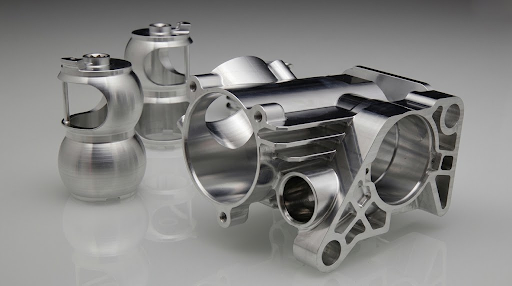
To scale up a product from the prototype to mass production, one has to increase the order volume, but not only that. Manufacturers are required to ensure dimensional accuracy, material performance, repeatable quality whilst controlling costs and delivery schedules. CNC machining offers a practical path through these steps, as prototype development and production planning can be based on the same digital design. Businesses can go from validating a single part to getting orders of more than 100,000 units with proper engineering reviews, machining capabilities, and quality controls without needing to change their design.
-
Build a Reliable Foundation With CNC Prototypes
Prototypes can show how well a design works before a lot of manufacturing resources are invested. CNC machining can be used to physically build the parts directly from the CAD models, enabling engineers to see dimensions, interfaces, mechanical behavior, and surface quality. CNC machining can make initial quantities without the investment in dedicated production molds, while other processes need dedicated production molds.
This versatility is helpful when prototype machining is used for testing out different geometries, materials, and tolerances. Engineers can detect the interference between components, analyze fastening arrangements, and further optimize features before finalizing the design. A successful prototype provides a baseline for the product to be made in the future and not just a visual example of what the product looks like.
-
Prepare Designs for Repeatable Manufacturing
What works as a prototype can yet need to be tweaked before it goes into production at 100,000 units. Excessive cavity depths, thin walls, complex internal corners, and unnecessary tolerances can lead to longer manufacturing times or to variation. These features are considered in design for manufacturability (DFM) reviews prior to production.
Engineers evaluate accessibility of the tool, workholding, material characteristics, and setups for machining to find potential issues. Consistent positioning of features and practical internal radii may ease the manufacturing process when using standard drill sizes. Tolerances on critical dimensions should be kept as specified, and tolerances on noncritical dimensions can be allowed to vary if function allows it—these modifications lower avoidable expenses without sacrificing critical performance.
-
Choose Materials and Processes for Production Demands
The choice of material used can affect the workability, strength, weight, rust resistance, and manufacturing costs. Aluminium 6061-T6 is suitable for a wide variety of lightweight housings and brackets, while stainless steel 316L is used for corrosion-resistant applications. POM, nylon, and PEEK offer varying degrees of stiffness, friction, chemical resistance, and temperature resistance.
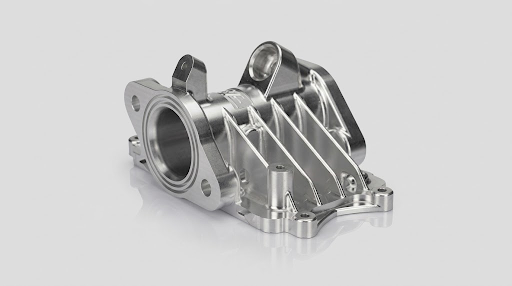
The choice of the machining process is also crucial. Three-axis milling is able to perform many simple part milling operations, while four- and five-axis milling allows access to multiple surfaces with fewer setups. Wire EDM is suitable for creating complex features in conductive materials, while CNC turning is suitable for shafts, pins, and bushings. Choosing custom CNC components involves considering the material specifications, functional requirements, production volume, and finishing requirements. This is a coordinated approach that ensures that the intended design is maintained when volumes go up.
-
Scale Through Structured Production Batches
Skipping from one prototype to a 100,000 order can create unnecessary operational risks. A staged production plan enables manufacturers to verify machining programs, inspection techniques, and compatibility of assemblies prior to producing larger volumes. Small amounts of production can reveal patterns of defects or limitations in the process with low change impacts.
A typical progression includes:
- Prototype validation: Produce initial parts to verify geometry, fit, material suitability, and functional requirements.
- Pilot production: Manufacture a controlled batch to evaluate cycle times, repeatability, inspection procedures, and finishing operations.
- Low-volume manufacturing: Produce approximately 100–1,000 units while monitoring quality trends and refining production planning.
- High-volume production: Expand toward 100,000 or more units using validated processes, planned machine capacity, and documented quality checks.
Each stage should have clear acceptance criteria. Production should advance when dimensional results, material requirements, and process performance meet the agreed specifications.
-
Maintain Consistent Quality Across Large Orders
Reliable scaling relies on measuring real-world results, and not assuming that all parts made in the machine will result in an exact replica of the digital one. Long production runs may cause variations in dimensions due to tool wear, thermal changes, workholding conditions, and material variations—scheduled inspections help to detect deviations before they become pervasive in large quantities.
Documented procedures, inspection records, and traceability are backed by an ISO 9001:2015 certified quality management system. Manufacturers can test for requirements using coordinate measuring machines (CMMs), precision gauges, and material analysis equipment, depending on the component. First article inspection is especially helpful when ramping up to full production, and in-process checks help to ensure that production is consistent. When projects require documented evidence, inspection reports and material certificates can also be used for verification.
-
Balance Production Costs, Finishes, and Lead Times
The unit cost varies with the cost of materials, machining time, setup, tolerances, finishing processes, as well as quantity. While larger orders can amortize programming and setup costs over more parts, the programming and setup costs may still have an impact on the final cost, depending on the geometry of the parts and their inspection requirements. Quoting at various quantities is useful in determining a feasible production approach.
Surface treatments should be the same as the component environment. Aluminium can be anodised to enhance the surface characteristics, powder coated for a decorative protective finish, and electroless nickel plated for specific wear and corrosion needs. Each extra operation will impact scheduling and cost.
3ERP offers CNC machining, turning, EDM, grinding, and finishing, and if the parts are simple, they could be available within 3 days. Lead times are subject to change depending on complexity, availability of materials, quantity, and shipping arrangements.
-
Coordinate Engineering, Capacity, and Delivery
If large production orders are placed, there needs to be coordination beyond machine availability. The manufacturer has to schedule the procurement of the raw materials, tooling, machine availability, inspection facilities, packing facilities, and transportation based on the delivery schedule. By communicating what revisions are needed and the acceptance criteria, outdated specifications will not enter production.
3ERP offers over 60 CNC machines and has experience in prototype and production manufacturing for various projects with varying production volumes. It has an engineering review process to determine manufacturing issues before orders are placed. Transit time, machining, and finishing can be considered in production schedules with global delivery options.
Conclusion
A prototype to 100K+ is a connected strategy that includes design optimization, material selection, process validation, quality assurance, and production planning. CNC machining offers flexibility at these steps, but variation needs to be managed and requirements verified at each step. Manufacturers can meet increasing demand in a more consistent manner by validating the designs early and then introducing production in stages while keeping documented inspections. As manufacturing grows, it’s essential to work with a knowledgeable manufacturing partner like 3ERP to ensure that engineering decisions, machining capacity, and delivery requirements are all in sync.

